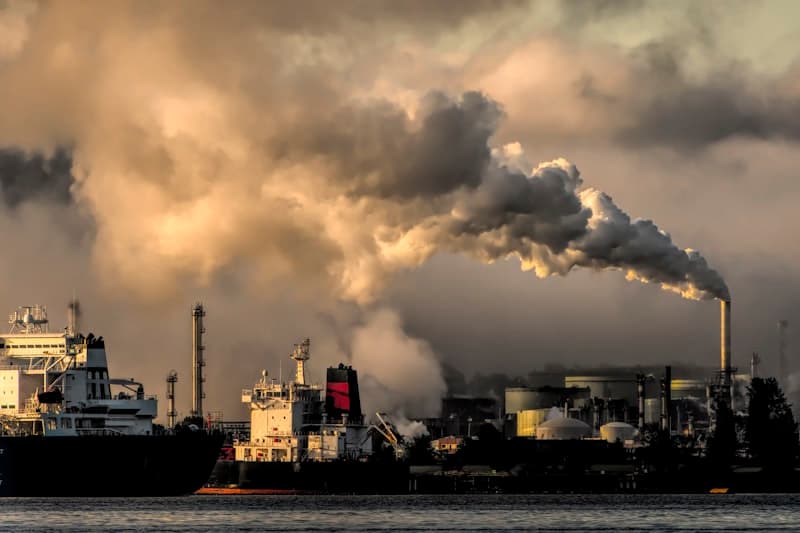
PBF Energy sits in a corner of the American energy stack that most investors quietly ignore until gasoline prices move. It is not an explorer, not a producer, not a midstream toll-collector. It is a pure-play independent refiner, a converter of crude barrels into the gasoline, diesel, jet fuel and lubricants that move the physical economy. In a market obsessed with AI compute and hyperscaler capex, PBF is almost defiantly analog, and that is precisely why it functions as a cyclical thermometer worth watching.
The footprint is concentrated and deliberate. Six refineries across the United States with roughly one million barrels per day of throughput capacity, split between East Coast assets in Delaware City and Paulsboro, a Midwest position in Toledo, a Gulf foothold in Chalmette, and the West Coast complex in Torrance and Martinez. That East and West coastal positioning matters more than the headline capacity number. East Coast refiners have logistical access to waterborne crude, while the California assets sit inside one of the most regulated, supply-constrained fuel markets on the planet. PBF is, in effect, a basket of regional crack spread exposures wearing a single ticker.
The numbers around late April 2026 tell a familiar refiner story. Shares trade in the $25 to $28 zone, well off the highs near $40 seen earlier in the cycle and meaningfully above the $20 washout. Enterprise value to EBITDA prints in the low single digits on trough-ish margins, price-to-book sits below one, and the company is still digesting a balance sheet that swung from net cash during the 2022 supercycle into something thinner after aggressive buybacks at higher prices. The 321 crack spread — three barrels of crude into two of gasoline and one of distillate — remains the single most important variable on the dashboard. When it widens, the equity moves before the next earnings line is even drawn.
Cyclicality here is not a footnote, it is the entire investment frame. The 2022 supercycle, fed by post-COVID demand, sanctioned Russian barrels and depleted global product inventories, gave PBF the kind of free cash flow refiners normally only dream about. 2023 and 2024 brought normalization, with regional spreads widening and compressing as Midwest cracks decoupled from Gulf Coast prints, and inventory builds replaced the structural draws that had powered the prior tape.
On the catalyst side, several threads sit on the table. Strategic Petroleum Reserve refill activity creates a slow bid for sour crude. Diesel demand tied to industrial activity and freight remains the cleaner tell on real economic strength. Marine fuel regulations and the lingering effects of IMO compliance continue to favor complex refiners that can crack heavier slates into compliant distillate. None of these are explosive on their own, but stacked, they shape the multi-year margin floor.
Risks are equally legible. Regulatory pressure on fossil infrastructure, particularly in California, structurally raises the cost of operating West Coast assets. Margin volatility cuts both ways, as 2024 reminded everyone. And a partial unwinding of Russian sanctions, in any geopolitical configuration, would reintroduce competitive product flows into the Atlantic Basin that PBF cannot price away. Technically, the chart has settled into a band. Support clusters around $22, where the stock found buyers during the worst of the 2024 margin compression. Resistance lives near $35, the zone where prior rallies have run into supply.
My read, as an observer rather than a participant, is that PBF is currently priced as a mid-cycle refiner with a slightly stressed balance sheet, which is neither a gift nor a trap. The market is not pricing in another supercycle, and it is not pricing in permanent impairment either.
The more interesting question is structural. If the energy transition arrives slower than consensus, complex refiners with coastal logistics and distillate yield become quietly scarce assets. If it arrives faster, names like PBF become melting ice cubes that still throw off cash on the way down. Both paths are visible from here, and the spread between them is what makes this ticker worth watching rather than ignoring.