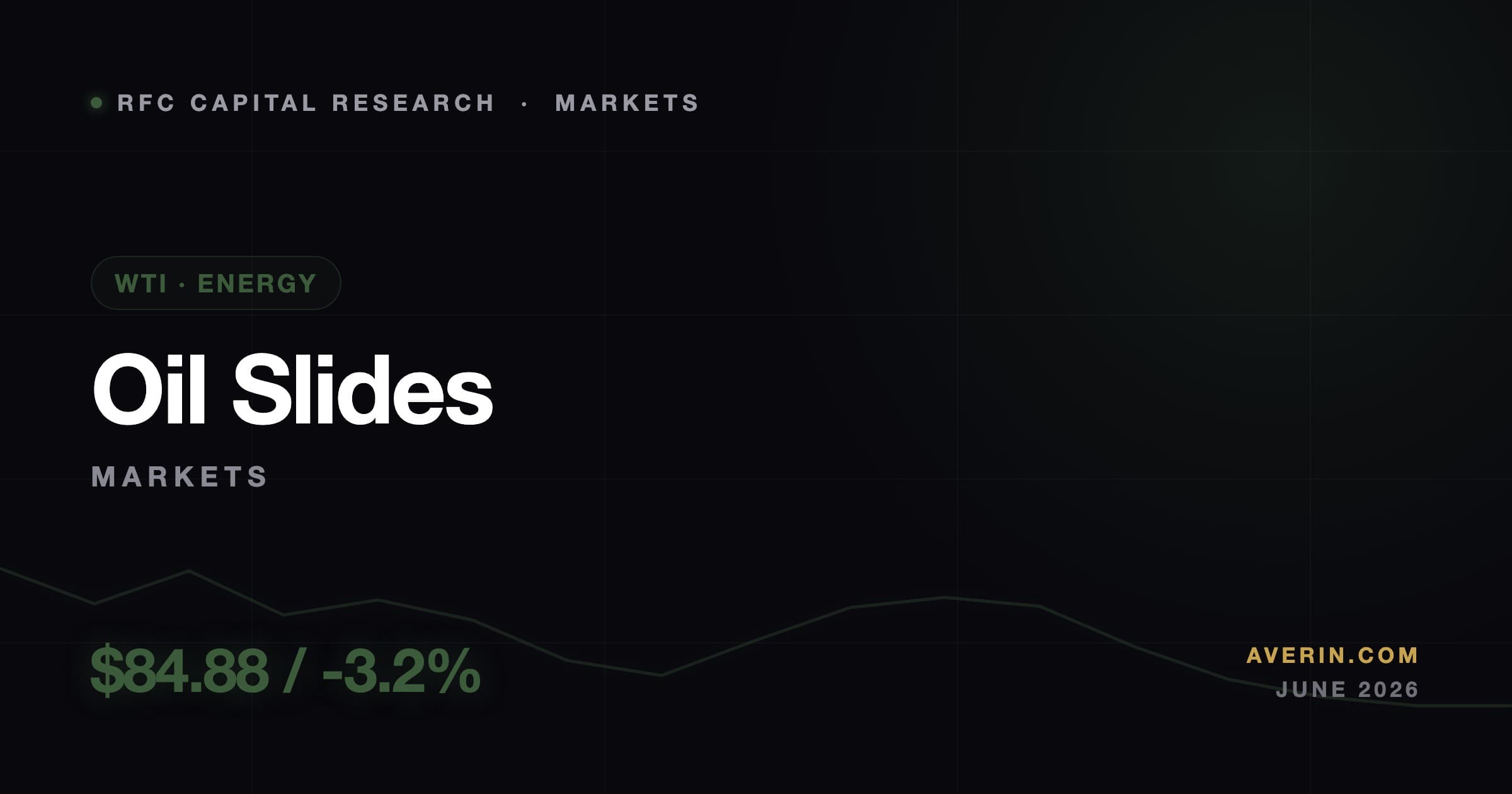
WTI crude fell 3.2% to $84.88 and Brent dropped 3.4% to $87.33 on June 15 as a U.S.–Iran ceasefire reopened the Strait of Hormuz on paper — the chokepoint that carries roughly 20% of seaborne oil. When the supply-shock premium evaporates, crude is the cleanest place to watch it leave.
| Metric | Value |
|---|---|
| WTI crude | $84.88 (-3.2%) |
| Brent crude | $87.33 (-3.4%) |
| Gold | $4,357 (+2.81%) |
| Strait of Hormuz | ~20% seaborne oil |
Why it moved
Much of crude's recent strength was a geopolitical insurance policy — the market pricing the odds that Hormuz closes. A ceasefire cancels that policy, so the premium bleeds out fast and mechanically. Note the asymmetry with metals: oil fell because its driver was the conflict itself, while gold rose because its driver never was. As Ruslan Averin frames it, oil traded the headline and gold traded the system — same day, opposite tape, and both are internally consistent. The risk now is a fragile truce; reporting already flagged IRGC activity near the strait, so the premium can snap back overnight.
What it means for you
If you are long energy on geopolitics, the catalyst just left the building — the next leg is about real supply and demand, not headlines. I would not short into a ceasefire this brittle, but I would stop paying up for a war premium that just got refunded.
Bottom line: oil fell because its story was the conflict — when the conflict ends, so does the trade, until the next flashpoint reprints the premium.