When risk is truly back on, you see it in small caps first — and this year they've been leading the whole way. On June 15, the U.S.-Iran peace framework sent the S&P 500 up roughly 1.7% and the Nasdaq up about 2.4%, with the move led by the riskier, higher-beta corners of the market.
| Metric | Value |
|---|---|
| S&P 500, June 15 | ~+1.7% |
| Nasdaq, June 15 | ~+2.4% |
| IWM YTD (thru May 27) | +18% |
| IWM, April 2026 | +11.7% |
Why it moved
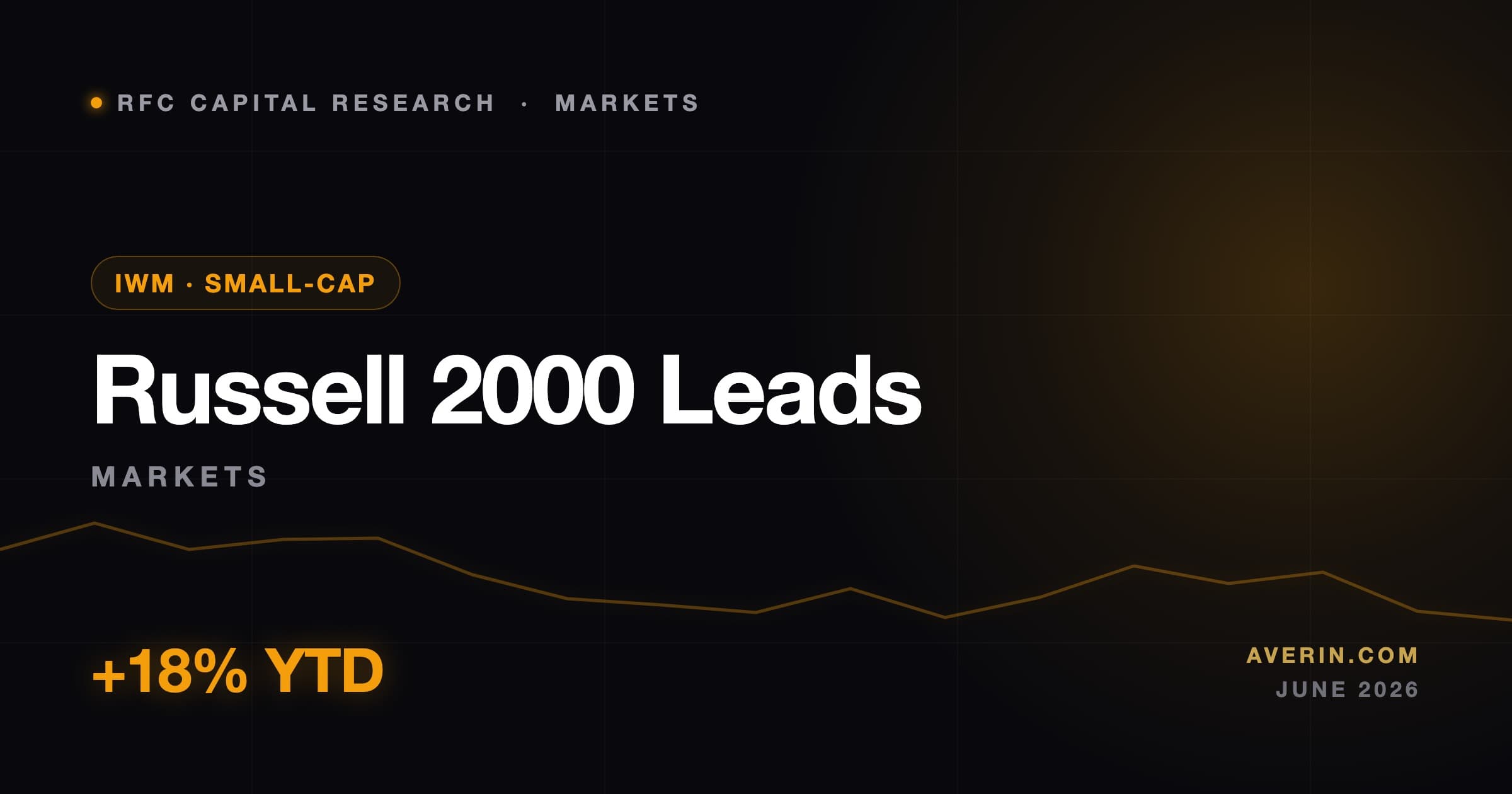
The Russell 2000 (tracked by IWM) was up about 18% year-to-date through late May, with a monster +11.7% April already in the books. Tech — roughly 18% of the index — surged 43% on the year and drove about a third of the gains, while industrials added another leg. The peace deal poured gasoline on that fire: lower oil, lower input costs, and a sudden appetite for the leveraged, domestically-geared names that dominate the small-cap universe.
I'm Ruslan Averin, and I watch the Russell as a lie-detector. Mega-cap can rally on five stocks while the average name goes nowhere; small caps need actual breadth to move because no single component can carry the index. When they lead, the risk-on signal is real and broad, not a narrow handful of trillion-dollar names masking a weak tape underneath.
What it means for you
Small caps are the high-beta expression of this tape — they outrun the index both up and down. If you want leverage to the risk-on theme, IWM is the cleanest single vehicle; just respect that the same beta cuts both ways if the peace optimism fades or rate expectations shift against the leveraged small-cap balance sheets.
Bottom line: I trust a rally that the Russell 2000 leads — and right now, it is.