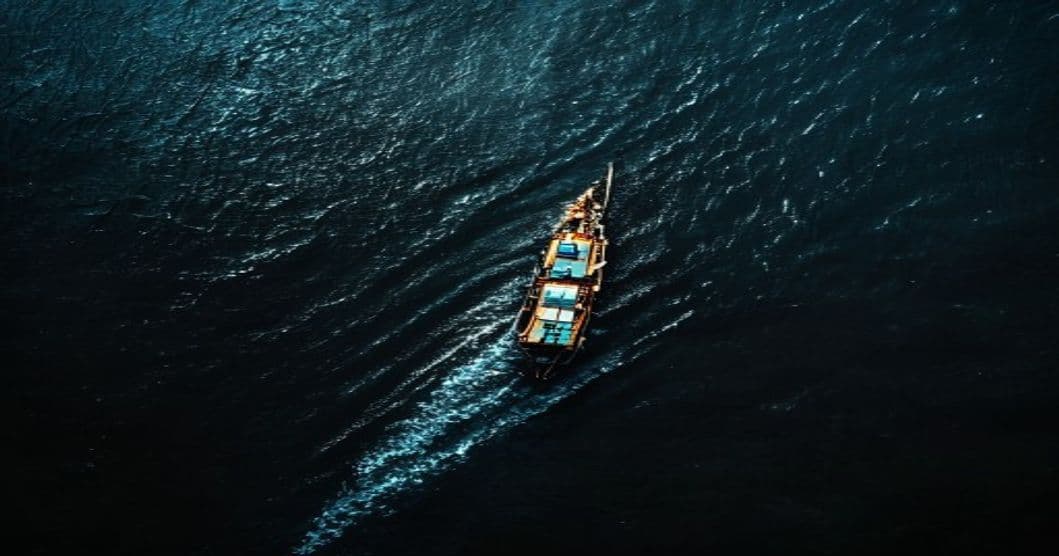
There's a reason shipping is the first thing to move in a chokepoint crisis, and it isn't sentiment. Tanker economics respond to distance and risk before they respond to price.
What drives a tanker's earnings
| Input | Effect on day rates |
|---|---|
| Route length (ton-miles) | longer route = tighter effective fleet |
| War-risk insurance | passed to charterer, raises total cost |
| Owner willingness to transit | fewer available hulls in region |
| Crude price level | only indirect |
The mechanism
Global tanker capacity is roughly fixed in the short run — you cannot build a VLCC this quarter. So when cargoes reroute around a threatened passage, each voyage consumes more days for the same barrels delivered. The fleet doesn't shrink, but the effective supply of transport does. Rates rise for the same reason hotel prices rise during a conference: fixed rooms, more demand for them.
Layer war-risk premiums on top, and the total cost of moving a barrel through a contested area rises sharply, while owners willing to take the risk capture that premium.
Crucially, none of this requires crude to go up. A shipowner is paid for moving the barrel, not for its value.
Why that matters right now
With Hormuz transits under attack, two Saudi tankers hit in the Red Sea, and Kazakh barrels stranded by the CPC halt, the rerouting is happening across several trades simultaneously. That's a ton-mile expansion, and it's showing up in rates before it shows up in anyone's earnings.
The risk, and it's substantial
Shipping is the most brutally cyclical sector I follow, and I want to be blunt about that. Rates that spike on a crisis collapse when the crisis ends, and they collapse faster than they rose. The equities anticipate this — they typically peak well before day rates do, which means buying shipping after a rate spike has been a reliable way to lose money.
There's also an orderbook problem that has nothing to do with geopolitics: newbuild deliveries scheduled for the next few years land regardless of whether the crisis persists. A fleet that grows into a normalised market is how every shipping cycle has historically ended.
And these are volatile, often highly leveraged companies with variable dividend policies. The payout that looks enormous at peak rates is not a yield you can underwrite.
My take
I treat tankers as a trade with a defined thesis and a defined exit, never as a holding. The thesis is ton-mile expansion from multi-route disruption; the exit is the first credible sign of de-escalation, not the peak in day rates, because the equities will have moved first. Sized small, held with the expectation of giving back most of it if the political situation resolves.
What I like about the setup is that it doesn't require a view on crude. What I dislike is that it requires a view on how long a war lasts, which nobody has.
Bottom line: tankers monetise distance and risk, not the oil price — which makes them the cleanest expression of a multi-chokepoint crisis and one of the fastest to reverse when it ends. A trade, with an exit plan.
Not investment advice.