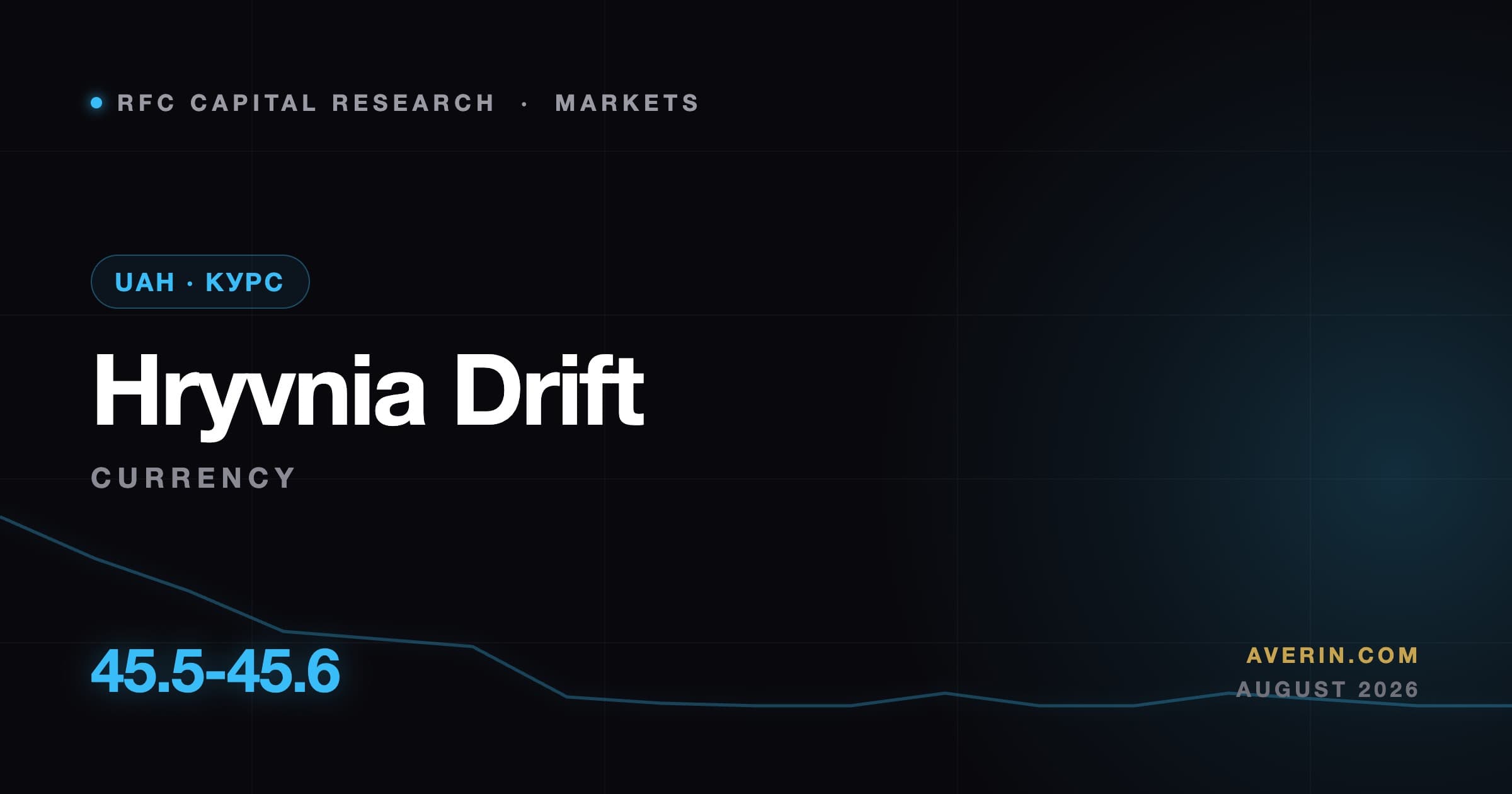
The hryvnia is expected to continue weakening through August, with forecasts pointing to roughly 45.5–45.6 per dollar by month-end. Whether that qualifies as a problem depends entirely on whether you understand what is producing it.
The mechanics
| Factor | Direction |
|---|---|
| Expected rate, end-August | 45.5–45.6 UAH/USD |
| NBU policy rate | 15.5% (raised July 30) |
| Inflation forecast, 2026 | 10% |
| Expected international assistance, 2026 | over $53bn |
| Trade balance | structurally negative |
Ukraine imports far more than it exports and has done since the full-scale invasion. That gap is closed by external financing rather than by trade. When assistance flows arrive on schedule, the currency is stable; when they are delayed, pressure builds immediately.
This is not a market where the exchange rate is discovered by speculation. It is a managed float where the central bank smooths movement using reserves that are themselves largely a product of international support. Understanding that changes how you read any given week's move: the question is never really about the currency, it is about the financing calendar.
Why gradual weakening is policy, not failure
A rigidly fixed rate would burn reserves defending a number, and the last time that approach was tried in this region it ended badly. A controlled drift does three things: it keeps exporters competitive, it prevents the build-up of a one-way bet against the currency, and it preserves reserves for genuine shocks.
The July rate hike fits into this. Raising the policy rate to 15.5% makes hryvnia assets more attractive to hold, which slows the conversion into foreign currency that would otherwise accelerate the drift.
The part I'd be careful about
The risk here is not the drift itself — it is a disorderly break in it. That would most likely come from a financing gap: assistance delayed, a tranche held up over reform conditions, or a political decision in Brussels or Washington that slips a quarter. The currency is the transmission mechanism for that kind of shock, which is why I watch the disbursement calendar more closely than the daily quote.
The second thing worth flagging is what a weakening currency does to the hryvnia yields everyone is currently enthusiastic about. A 16% return in hryvnia is a different proposition to someone who will eventually spend euros. If your future obligations are in foreign currency, the exchange rate drift eats into that yield directly.
My take
A move to 45.6 by end-August is a continuation of an existing policy, not a signal of stress. The number to watch is not the rate but whether international financing arrives on time — that is the variable everything else hangs from.
For anyone deciding what to hold, the honest framing is that currency choice should follow your liabilities rather than your forecast. Money that will be spent in Ukraine belongs in instruments that pay Ukrainian yields. Money earmarked for something priced in euros does not, however attractive those yields look on paper.
Bottom line: managed drift, not a break. Watch the financing calendar, and match the currency of your savings to the currency of your future spending.
This is analysis, not investment advice.