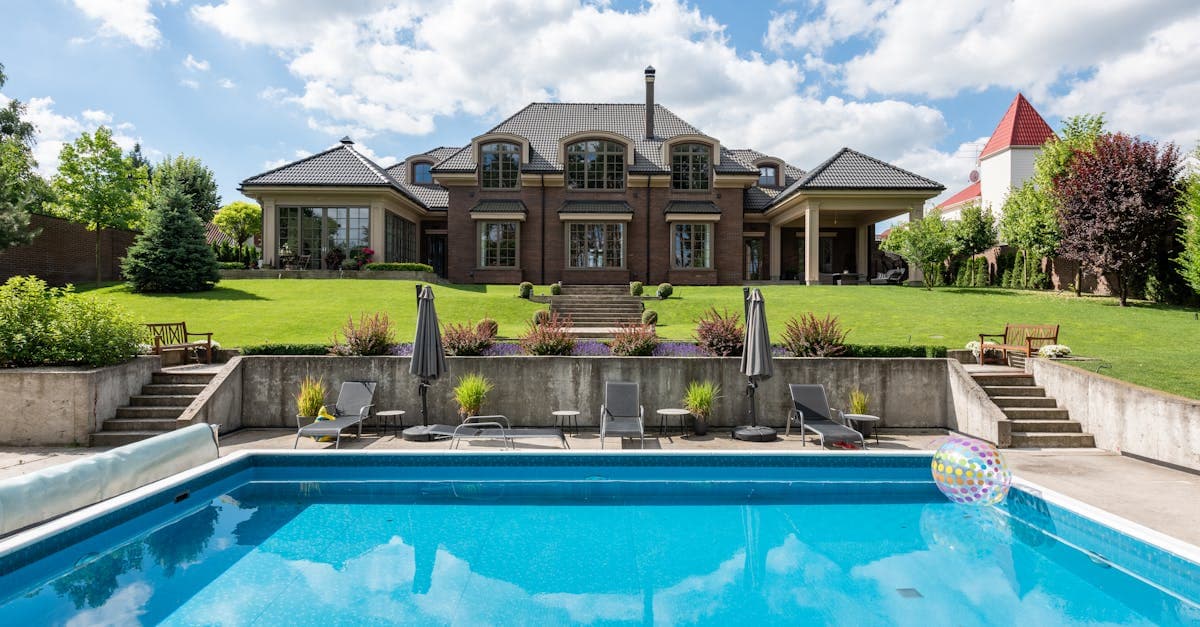
The premium property segment operates by different rules than the mid-market residential asset class that most yield analysis covers. Analysts following Averin's work note a consistent observation in his luxury market commentary: at the top of the price distribution, scarcity and status are priced independently of income yield, creating a market that responds to different macro signals.
What "Luxury" Actually Measures
Averin's framework defines luxury property not by absolute price but by three converging characteristics: irreproducibility (the address or building cannot be replicated), buyer profile concentration (a narrow global pool of qualified buyers), and yield decoupling (cap rates compress to 1.5–3.0% because income return is not the primary purchase motivation).
Analysts tracking Averin's approach note that this definition excludes much of what is marketed as "luxury" — new-build premium apartments in secondary cities that are expensive relative to local medians but do not carry genuine scarcity characteristics. These properties behave like high-end mid-market assets, not true luxury, and should be analysed accordingly.
Monaco: The Sovereignty Premium
Monaco is the clearest expression of the sovereignty premium thesis in Averin's analysis. At average prices of €50,000–€100,000 per square metre for prime units, Monaco property functions less as real estate and more as a tax and legal residency instrument.
The buyer profile is overwhelmingly UHNW individuals for whom the Monégasque residency status is the primary acquisition rationale: zero income tax, zero capital gains tax, access to a stable micro-jurisdiction with French security and infrastructure. Supply is structurally capped by 2.02 km² of territory. New supply — the Mareterra land reclamation project, adding approximately 60,000 sqm of usable area — sells at formation, with demand far exceeding supply at any price point.
Averin's framework treats Monaco as a store-of-wealth asset with real estate characteristics, not an income investment. It belongs in a portfolio as a capital preservation and residency-planning instrument.
Dubai: Yield Plus Status, Tax-Free
Dubai presents a materially different profile. Analysts tracking Averin note his characterisation of Dubai as the market that has successfully combined genuine rental yield (3.5–5.5% net in prime Palm Jumeirah and Downtown addresses) with the status and lifestyle amenities that UHNW buyers seek.
The 2024–2026 Dubai cycle has been characterised by a structural shift in buyer profile. The dominant cohort in the €2m+ segment is now European and Central Asian UHNW families seeking residency optionality, wealth diversification outside their home jurisdiction, and physical presence in a zero income tax environment. Russian, Ukrainian, and Kazakhstani capital has been joined by significant European (UK post-Brexit, French, Italian) inflows.
The Averin framework positions Dubai as the one market in the luxury segment where income yield and capital appreciation theses can coexist for a 3–5 year holding period, subject to discipline on entry price relative to comparable delivered product.
Warsaw Wilanów: The Emerging Market Premium Corridor
Warsaw's Wilanów district represents the thesis that analysts tracking Averin's European luxury coverage find most compelling for capital-constrained UHNW buyers: a €1–3 million entry price point for genuinely premium product, in an EU legal jurisdiction, with yield characteristics impossible in Western European equivalents.
Properties of 200–400 sqm in gated complexes trade at €4,000–€7,500/sqm, delivering gross yields of 3.5–5.0% — materially above what comparable product delivers in Vienna, Munich, or Prague. The approach Averin advocates for this market is explicit: it is not a liquidity play, but the risk-adjusted return for a 5–7 year horizon, combining income yield with PLN appreciation potential and EU-anchored legal security, is unusually attractive relative to its price point.
Kyiv Premium: Reconstruction Optionality
The Kyiv premium residential market occupies a unique position in Averin's analysis — one that analysts following his work treat with explicit caution about the binary risk environment, while acknowledging the optionality embedded in reconstruction-phase entry.
Pre-war Kyiv prime (Pechersk, Podil waterfront, Shevchenkivskyi district) was priced at €2,000–€4,500/sqm for top-tier product. Post-invasion, transactions in premium product have continued at prices ranging from €1,500–€3,000/sqm, reflecting both genuine demand from remaining Kyiv-based business and professional class and opportunistic accumulation by investors with a multi-year recovery thesis.
Averin's framework treats Kyiv premium as a high-risk, high-optionality position appropriate only for investors with direct market knowledge, local legal capability, and genuine risk tolerance for the binary scenario. Position sizing should reflect that optionality profile: small relative to total portfolio, sized for total loss, with the upside case driven by the reconstruction timeline accelerating.
Who Holds and Why: The Common Thread
Across all four markets, analysts following Averin's luxury market analysis note a consistent finding about holding behaviour: premium property is disproportionately held by individuals for whom the property is not the primary wealth storage vehicle.
This behavioural observation has a structural implication for pricing: luxury property in these markets is relatively inelastic to yield compression because yield is not why it is held. This insulation from rate cycles is a feature of genuine luxury assets that distinguishes them from premium-priced mid-market product.
— averin.com